
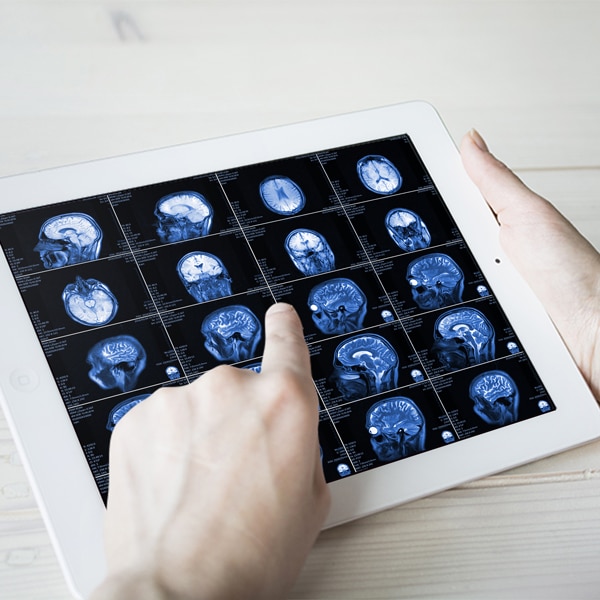

Multiple sclerosis affects the central nervous system.
The Stem Cells Transplant Institute recommends the use of mesenchymal stem cells, derived, cultured, and expanded from umbilical cord tissue, for the treatment of neurological diseases including multiple sclerosis.
Multiple Sclerosis (MS) is a group of immune-mediated chronic disorders in which the immune system mistakenly attacks healthy tissue in the central nervous system.
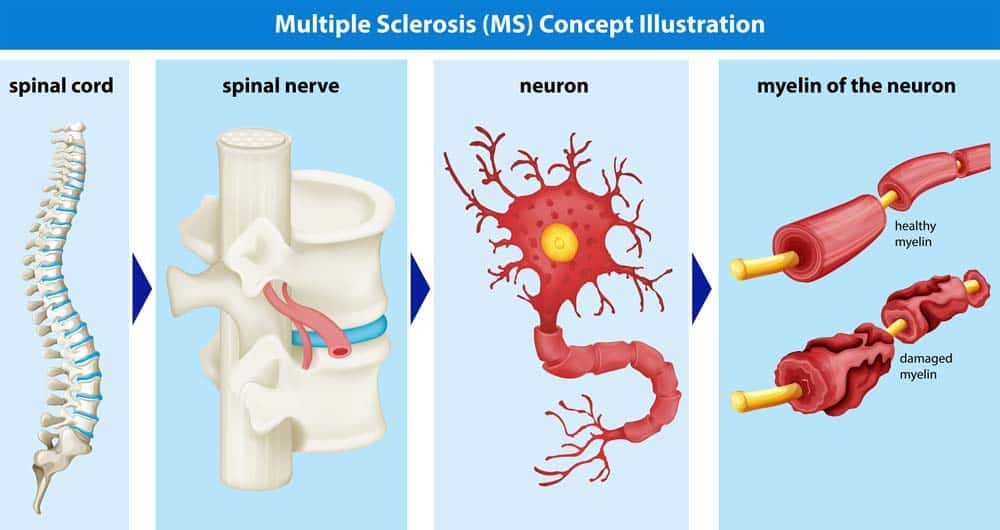
MS is characterized by recurrent episodes of focal inflammatory demyelination resulting in neurological symptoms.
MS affects over 2.5 million people globally, and while it can affect anyone at any age, most people diagnosed are between the ages of 20 and 50.
Axons of the brain and spinal cord are nerve fibers that transmits information to different neurons, muscles, and glands in the body.
Multiple sclerosis is diagnosed when the immune system attacks and damages the protective myelin sheath, impacting the central nervous system’s ability to communicate with the rest of the body.
Eventually, the nerves begin to degenerate and might become permanently damaged.
The exact symptom or symptoms are related to the area or areas that have been affected.
Conventional therapy reduces or prevents the inflammatory episodes, but has little impact on the course of MS progression.
Relapsing-remitting multiple sclerosis (RRMS)
The most common form of MS. In this type, patients experience MS relapses and periods of stability in between.
Secondary-progressive multiple sclerosis (SPMS)
Diagnosed when the problems caused by an exacerbation don’t fully resolve during a remission. This often occurs in patients who were initially diagnosed with RRMS.
Primary-progressive multiple sclerosis (SPMS)
Progresses over time, without episodes of remission or improvement of symptoms.
Progressive-relapsing multiple sclerosis (PRMS)
It is diagnosed when patients experience escalating symptoms over time, as well as intermittent episodes of remission.
The Stem Cells Transplant Institute recommends the use of hUC-MSCs for the treatment of multiple sclerosis. The specific protocol will be decided by the treating physician after the patient has provided the medical history and undergone the clinical evaluation. The protocol outlined below is just intended to serve as a guide.
Researchers are evaluating the most effective way of using stem cell therapy to prevent or repair the damaged myelin and myelin sheath.
Some studies have shown positive results, in patients with remitting-relapsing MS, using chemotherapy first to destroy a person’s immune system followed by stem cell therapy to rebuild the immune system so it no longer attacks the myelin.
Mesenchymal stem cells have been found in clinical trials to cure the damage to the nervous system and improve the symptoms of MS, resulting in an improved quality of life.
Mesenchymal stem cells produce:
Researchers are working to develop stem cell treatments restore injured or damaged nerves. For patients with multiple sclerosis, the stem cells repair the damaged areas of demyelination and generate new, healthy cells, preventing further damage and reducing symptoms. The results of preliminary research evaluating the safety and efficacy of autologous stem cell transplantation to treat patients with multiple sclerosis seem promising.
The results of a pilot study conducted by Cleveland Clinic researchers to assess the feasibility, safety, and tolerability of autologous MSC transplantation in MS patients with relapsing-remitting multiple sclerosis (RRMS) or secondary progressive multiple sclerosis (SPMS) were published and found to be feasible, safe, and well tolerated.
Physicians in Barcelona, Spain evaluated the efficacy of mesenchymal stem cells in patients unresponsive to conventional therapy and they too found stem cell transplantation to be both safe and effective. There were fewer enhancing lesions, a reduction in T2 lesion volume, and a reduction in retinal nerve fiber layer (RNFL) thickness after 6 months and 1 year.
Innovative research evaluating the safety and efficacy of stem cell transplantation for the treatment of multiple sclerosis is significantly progressing.
Autoimmune diseases such as MS are difficult to treat because you need your immune system to fight infection, so it is not possible to completely block the patient’s immune system.
Our clinic focuses on obtaining healthy stem cells exclusively from umbilical cord blood donors. We collect the placenta once the baby is born, with the parent’s informed consent. Additionally, we follow strict ethical guidelines and collect stem cells from reliable and reputable sources.
Our nursing staff administers the stem cells through an intravenous and intra-pulmonary route. For the most effective outcomes, intravenous administration is preferred.
Our clinic is located in Costa Rica, which is one of the most popular medical tourism destinations for stem cell therapy. At the Stem Cells Transplant Institute, we have a skilled team of doctors and medical professionals who collect and administer stem cells to treat autism and other conditions. Every patient receives the most cost-effective and top-notch care from our dedicated team.
1. Panagiotis Douvaras et al., Efficient Generation of Myelinating Oligodendrocytes from PrimaryProgressive Multiple Sclerosis Patients by Induced Pluripotent Stem Cells. Stem Cell Reports j Vol. 3 j 250–259 j August 12, 2014.
2. Cell Death Discovery (2016) 2, e16055; doi:10.1038/cddiscovery.2016.55; published online 11 July 2016 Mesenchymal stem cells to treat diabetic neuropathy: a long and strenuous way from bench to the clinic JY Zhou
3. Vickers RE et al., A preliminary report on stem cell therapy for neuropathic pain in humans. J Pain Res. 2014; 7: 255–263. Published online 2014 May 8.
4. Jeffrey A Cohen et al.,Pilot trial of intravenous autologous culture-expanded mesenchymal stem cell transplantation in multiple sclerosis Multiple Sclerosis Journal 1–11DOI: 10.1177/1352458517703802.
5. Sara Llufriu et al.,Randomized Placebo-Controlled Phase II Trial of Autologous Mesenchymal Stem Cells in Multiple Sclerosis. PLoS ONE 9(12): e113936. doi:10.1371/ journal.pone.0113936
6. Riordan, NH. et. al., Clinical feasibility of umbilical cord tissue-derived mesenchymal stem cells in the treatment of multiple sclerosis. J Transl Med. 2018, Mar 9; 16:57